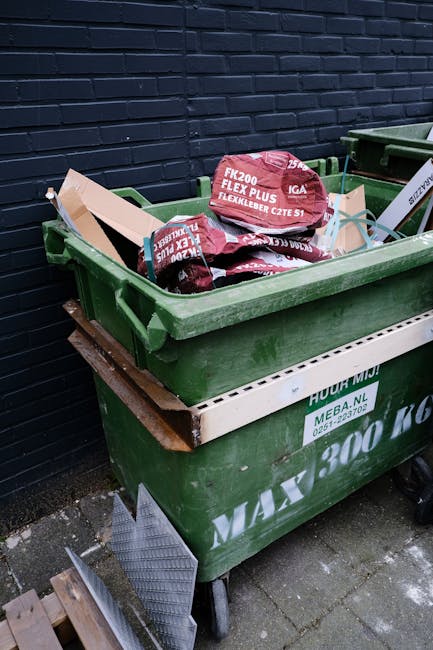
Victoria Street builders rubbish clearance and access solutions
If you are dealing with a building project on or around Victoria Street, you will already know the awkward bit is often not the construction itself. It is the mess. Offcuts, broken plasterboard, rubble, timber, packaging, old fixtures, and the constant problem of getting it all out without blocking access or slowing the job down. That is where Victoria Street builders rubbish clearance and access solutions come in.
In simple terms, this is about clearing builder's waste quickly and safely while making sure people, vehicles, trades, and neighbours can still move through the space. Sounds straightforward. In practice, it can be anything but. Narrow entrances, basement stairs, shared walkways, lift restrictions, time windows, and unexpected heavy loads can turn a tidy job into a daily headache.
This guide explains how the process works, what to plan for, who it suits, and how to avoid the mistakes that waste time and money. If you want the site to stay productive, compliant, and reasonably calm, you are in the right place.
Table of Contents
- Why Victoria Street builders rubbish clearance and access solutions matters
- How Victoria Street builders rubbish clearance and access solutions works
- Key benefits and practical advantages
- Who this is for and when it makes sense
- Step-by-step guidance
- Expert tips for better results
- Common mistakes to avoid
- Tools, resources and recommendations
- Law, compliance, standards, or best practice
- Options, methods, or comparison table
- Case study or real-world example
- Practical checklist
- Conclusion
- Frequently asked questions
Why Victoria Street builders rubbish clearance and access solutions Matters
Builder's waste is not just "rubbish". On an active site, it affects safety, speed, and the confidence of everyone involved. One overflowing bag, a blocked doorway, or a pile of broken material in the wrong place can stall deliveries, create trip hazards, and make it harder for trades to do their jobs properly.
Victoria Street has its own pressures too. It is a busy part of London, which usually means limited loading space, more foot traffic, and less room for error. A clearance plan that works on a quiet suburban street can fall apart fast here. Access matters as much as removal. If the waste can't get out efficiently, the site can't keep moving efficiently either.
This is also where planning becomes more than a nice idea. You need to think about who can enter the site, what needs to pass through it, when waste can be moved, and how to avoid interfering with residents, businesses, or nearby pedestrians. A small decision, like where to place bags or whether to use a dedicated hold point, can save a lot of rework later.
Expert summary: good builders rubbish clearance is not about "taking stuff away". It is about keeping the work zone open, safe, and predictable so the job finishes cleaner, faster, and with fewer surprises.
For projects with mixed waste streams, it also helps to separate recyclable material from general waste and to decide early what needs specialist handling. If you are unsure what can be mixed and what should be kept apart, the page on what can go in a skip is a useful reference point, even if you are not using a skip at all. The principle is the same: avoid contamination, avoid delays.
How Victoria Street builders rubbish clearance and access solutions Works
The process usually starts with a site review. Not a glamorous part, granted, but it matters. Someone needs to look at the access route, the volume and type of waste, the floor level, stairs, lifts, kerb access, and any restrictions on timing or vehicle stopping. That early look tells you whether the job is a simple load-out or something that needs more thought.
From there, the clearance is planned around the practical route out. That might mean:
- bagging lighter waste for faster handling
- breaking down larger items to fit narrow passages
- protecting common areas before moving material through them
- using trolleys, dollies, or carrying teams where needed
- choosing the right vehicle size for street access
- staging waste in a safe, temporary collection point
Then comes the actual removal. For small jobs, that might be a single collection with a handover at ground level. For bigger refurbishments, it may mean repeated collections so the work area never clogs up. The best systems are the ones the site barely notices, apart from the fact that the mess disappears.
Access solutions are really about removing friction. If the route is tight, the team has to plan the movement of waste as carefully as the waste itself. That can include timing the work around deliveries or tenant access, using shorter carry distances, or arranging staged clearance so nothing builds up to a dangerous level. In a tall building, even the sound matters; repeated bumps, dragging, and hasty lifting can quickly annoy everyone. Nobody wants that conversation in the hallway at 8:15 in the morning.
Good providers will also factor in safety and separation. Some materials need special treatment, especially if you have plasterboard, insulation, paint tins, sharps, or anything that may fall under hazardous waste rules. If that is part of your project, you should look carefully at the guidance on hazardous waste disposal before moving ahead.
Key Benefits and Practical Advantages
There are several solid reasons to organise builders rubbish clearance properly rather than leaving it to "we'll deal with it later". Later usually becomes messier, more expensive, and more annoying.
1. Cleaner access, fewer delays
If waste is cleared as work progresses, trades can move freely and the site does not become a bottleneck. That means less time spent stepping around bags, fewer interrupted tasks, and fewer arguments about whose material is whose.
2. Better safety on site
Trip hazards, sharp edges, unstable piles, and blocked exits are not minor inconveniences. They are avoidable risks. A structured clearance plan keeps routes open and reduces the chance of someone carrying a heavy item through a cramped space at the wrong angle. You know how that ends. Usually badly.
3. Smarter use of limited space
Victoria Street sites often do not have spare room to waste. If you can keep materials moving out, you keep valuable space available for tools, trades, and the actual build. That matters even more in flats, offices, basements, and compact commercial units.
4. Less disturbance for neighbours or building users
Well-managed access solutions reduce noise, blockages, and confusion in shared areas. That is especially useful in mixed-use buildings where people are living, working, or passing through while the job is underway.
5. Better sorting and recycling
When waste is handled properly, it is easier to separate recyclable material from general waste. That supports a more responsible clearance process and usually makes the job neater overall. For a fuller look at the wider approach, the page on recycling and sustainability is worth a read.
| Benefit | What it means in practice | Why it matters on Victoria Street |
|---|---|---|
| Faster clearance | Waste leaves the site before it builds up | Helps keep tight access routes open |
| Safer movement | Fewer obstacles and less manual congestion | Reduces trip risks in busy or shared spaces |
| Cleaner workflow | Less clutter around active work areas | Makes limited site space work harder |
| Better planning | Access and loading are thought through early | Prevents last-minute scrambles |
Who This Is For and When It Makes Sense
This kind of service is useful for a lot more than large construction jobs. Truth be told, many "small" projects create the worst access headaches because everyone assumes they will be simple.
You may need Victoria Street builders rubbish clearance and access solutions if you are:
- managing a refurbishment in a flat, townhouse, or commercial unit
- working on an office fit-out with limited loading access
- replacing kitchens, bathrooms, or internal fixtures
- stripping out old materials before a remodel
- dealing with post-demolition rubble and mixed construction debris
- coordinating trades on a tight schedule
- trying to keep a property usable while work continues
It also makes sense when access is awkward rather than impossible. Awkward is enough. Narrow front steps, basement-level entries, shared corridors, time-limited parking, or lift-only access all tend to slow things down if you have not planned for them.
If you are dealing with a broader mix of non-building items during a project, such as old furniture, office items, or household contents being removed alongside the refurbishment, it can help to look at related pages like office clearance or house clearance. Sometimes a job starts as a building clearance and quietly turns into a full reset. Happens all the time.
Step-by-Step Guidance
If you want the process to run smoothly, treat it like part of the build rather than an afterthought.
- Map the access route. Look at the route from the waste point to the vehicle. Note stairs, doors, lift dimensions, corners, uneven paving, and places where people may need to pass.
- Identify the waste types. Separate rubble, timber, plasterboard, packaging, metal, and anything that may need special handling.
- Estimate the volume honestly. Overestimating a little is safer than underestimating and ending up with waste backed up against the wall.
- Choose the right removal method. Hand loading, bagged collection, staged clearance, or a mixed approach may all work depending on the site.
- Protect the route. Use floor protection and keep common areas clear where waste has to move through shared access.
- Set a collection window. Align the clearance with the work schedule, not against it. There is nothing clever about clearing waste just as a delivery arrives.
- Keep the site tidy as you go. Small, regular movements are usually safer and more efficient than one huge panic at the end.
- Review the final sweep. Check for hidden debris, fixings, dust pockets, and anything left behind in corners or under benches.
A practical note: if you are using a skip or comparing a skip with direct clearance, take five minutes to review what can go in a skip. It helps avoid the classic "we thought that was fine" moment. Those are never fun.
Expert Tips for Better Results
Most access and clearance problems are solved before they start. A few small habits make a real difference.
Tip 1: Keep the waste stream simple. The more mixed the waste becomes, the harder it is to move and sort. If possible, keep bulky timber, inert rubble, and general waste separate from the beginning.
Tip 2: Think in carry distances, not just square footage. A site may look manageable on paper, then turn into a long carry through a staircase and a loading bay. Carry distance affects labour, timing, and safety more than people expect.
Tip 3: Treat shared access with respect. If the route passes through communal halls or a business entrance, protect it properly. A clean corridor after a job tells people you planned well.
Tip 4: Schedule around real-world pressure. Early mornings can be efficient, but they are not always best in every building. Sometimes a later slot avoids crowds, lifts, and grumpy neighbours. Not glamorous, but sensible.
Tip 5: Ask about insurance and safety procedures. When heavy objects, stairs, and narrow entrances are involved, you want the team to work carefully. A sensible provider should be able to explain how they approach insurance and site protection. You can also review the company's own insurance and safety information for peace of mind.
Tip 6: Keep one person in charge of site decisions. Too many voices slows things down. One contact who can say yes, no, or "move it there" makes the whole process feel calmer.
Common Mistakes to Avoid
The same problems come up again and again. They are easy to make, which is why they are so annoying.
- Leaving clearance too late. Waste builds up fast. Once it is in the way, everything takes longer.
- Assuming access is "fine". Fine for whom? A small doorway can become a major issue once rubble bags are involved.
- Mixing everything together. This often leads to slower removal and more awkward sorting later.
- Ignoring shared spaces. Hallways, stairs, and lift lobbies need protection too.
- Forgetting about restricted items. Some waste cannot just be handled like ordinary rubble.
- Not checking the collection plan against the build schedule. If access is blocked by another trade, the clearance plan needs adjusting.
One of the less obvious mistakes is underestimating the physical strain on site. Moving debris through an awkward route is tiring, and tired people make mistakes. It sounds obvious, but somehow it gets missed. Every time.
Tools, Resources and Recommendations
You do not need a warehouse of equipment to manage builders rubbish clearance well, but the right basics help a lot.
- Heavy-duty rubble sacks for manageable loads and tidier handling
- Wheelbarrows or sack trucks where access allows, especially for repeated runs
- Floor and corner protection for shared areas and finished surfaces
- Gloves, dust protection, and sturdy footwear for the people handling material
- Clear labels or segregation points to keep different waste types apart
- Lighting for dark stairwells or basements because poor visibility slows everyone down
If your project includes office-style materials or business premises, the guidance on business waste removal can be helpful for thinking about mixed commercial waste. And if the site is a residential property where the work has expanded beyond building materials, home clearance may also be relevant.
It is also worth keeping the admin side tidy. Clear pricing expectations matter, especially on jobs where access is not straightforward. Before booking, many people prefer to check pricing and quotes so they understand what information is needed and what affects the estimate.
Law, Compliance, Standards, or Best Practice
Builder's waste is not an area where it pays to be casual. In the UK, duty of care principles generally mean waste must be handled responsibly, transferred to the right people, and managed in a way that avoids harm to people or the environment. You do not need to turn into a legal scholar, but you do need a sensible process.
In practical terms, that means:
- keeping waste under control rather than leaving it scattered around the site
- making sure any specialist waste is separated and handled correctly
- using proper containment where needed
- avoiding unsafe manual handling
- working in line with site safety rules and building requirements
If your project includes potentially hazardous material, contaminated items, or appliances, extra care is needed. Fridges, for example, are not just "big metal boxes". They can require separate handling. The same applies to mixed problem waste. For those situations, a page like fridge and appliance removal can point you in the right direction.
Best practice also includes documentation, even on smaller jobs. Keep records of what was removed, when it was collected, and who handled it. It is a boring bit, admittedly, but when something needs checking later, boring records are exactly what you want.
Options, Methods, or Comparison Table
There is no single right way to manage builders rubbish clearance. The best option depends on access, volume, and how much disruption the site can tolerate.
| Method | Best for | Pros | Limitations |
|---|---|---|---|
| Bagged clearance | Smaller jobs, staged waste removal | Flexible, tidy, easier through tight access | Slower for very large volumes |
| Manual loading | Sites with awkward or narrow routes | No need for large machinery, precise control | More labour-intensive |
| Skip-style approach | Projects with suitable kerbside or on-site space | Useful for bulk material, straightforward once positioned | Requires space and can be awkward in busy streets |
| Mixed staged clearance | Refurbs with changing waste streams | Flexible and efficient over time | Needs planning and good communication |
If you are comparing methods, the deciding question is usually simple: what keeps the work flowing with the least disruption? On Victoria Street, that often means choosing the route with the least friction rather than the one that looks cheapest at first glance.
Case Study or Real-World Example
Consider a typical mid-project refurbishment in a Victorian-style property close to Victoria Street. The work includes ripping out old floor coverings, removing timber offcuts, breaking down some internal fixtures, and clearing packaging from new materials. There is a narrow entrance, a shared stairwell, and only a short window for access because other users need the building during the day.
If the waste is left in the hallway "until the end", it quickly becomes a problem. Trades have to step around it. The stairwell starts to feel cramped. Someone has to stop work just to move bags out of the way. And suddenly the whole site feels messy, even if the actual workmanship is good.
Now imagine the same job handled with a simple access plan. Waste is bagged in smaller loads, kept in one holding area, and removed in stages before it spreads. Floors are protected. The collection route is agreed in advance. The team knows which door stays clear and when. The result is not magic. It is just organised. But that organisation changes the feel of the project completely.
That is the real value here. Not just "getting rid of rubbish", but keeping the site usable while the work continues. A small thing? Maybe. Yet on a tight site, it can be the difference between a stressed-out day and a smooth one.
Practical Checklist
Use this checklist before the job starts, or before the next clearance run.
- Have you mapped the route from waste point to vehicle?
- Do you know where the narrowest access points are?
- Have you identified rubble, timber, mixed waste, and any special items?
- Are shared areas protected?
- Is there a clear collection window?
- Have you confirmed who is the main site contact?
- Are lifting, carrying, and stacking methods sensible for the space?
- Have you checked whether any waste needs separate handling?
- Is the site likely to stay open to other users while clearance happens?
- Have you reviewed pricing expectations and any access-related assumptions?
Quick reminder: if the answer to any of those is "not really", sort it now rather than later. Later has a habit of being more expensive.
Conclusion
Victoria Street builders rubbish clearance and access solutions are about much more than hauling waste away. They are about keeping a working site safe, efficient, and easy to move through, even when space is tight and the pressure is on. When the access plan is right, everything else feels lighter. Tools move more easily. Trades stay focused. The site keeps breathing.
Whether you are tackling a small refurbishment or a bigger commercial strip-out, the same principles apply: plan the route, separate the waste, protect the access, and keep collections ahead of the pile-up. That simple discipline pays off again and again.
If you want a more joined-up approach to your project, it also helps to understand the wider service options, from builders waste clearance to the broader waste removal service range. A clear plan now usually saves a headache later.
Get a free quote today and see how much you can save.
And if you are standing in front of a half-finished room thinking, "right, where do we even start?", that is normal. Start with access. The rest gets easier from there.
Frequently Asked Questions
What does builders rubbish clearance usually include?
It typically covers the removal of construction and refurbishment waste such as rubble, timber, plasterboard, packaging, old fixtures, and general site debris. The exact mix depends on the project and what needs separate handling.
Why are access solutions important on Victoria Street?
Because many sites in the area have limited parking, narrow entrances, shared corridors, or restricted loading space. Without a proper plan, waste movement can interrupt trades and create safety issues very quickly.
Can builders waste be removed in stages?
Yes. In fact, staged clearance is often the safest and most efficient approach on busy or cramped sites. It prevents waste from building up and keeps access open throughout the project.
What if my site has stairs or no lift?
That is very common, and it just means the clearance method needs to be chosen carefully. Smaller loads, protected routes, and sensible carrying plans usually work better than trying to move everything at once.
Do I need to separate different waste types?
Usually, yes. Separating rubble, timber, metals, plasterboard, and specialist items helps with handling, sorting, and compliance. It can also make the whole job faster and tidier.
Is builders waste different from household rubbish?
Yes. Builders waste is usually heavier, dustier, sharper, and more varied. It also often requires more care around loading, access, and disposal routes than ordinary domestic waste.
What should I do with hazardous or restricted items?
They should be identified early and handled separately. Items like certain chemicals, contaminated materials, or appliances may need additional care. If in doubt, ask before moving them with general waste.
How do I know which clearance method is best?
Look at access, volume, timing, and how disruptive the site can tolerate. Small jobs may suit bagged clearance, while larger refurbishments may need staged removal or a bulk method.
Will clearance disrupt neighbours or building users?
It can, but good planning keeps disruption down. Clear routes, agreed time windows, and tidy handling make a big difference, especially in shared or mixed-use buildings.
How far in advance should I arrange builders rubbish clearance?
As early as you can. If the site is tight or the waste volume is likely to change, early planning gives you more options and fewer last-minute compromises.
Can rubbish clearance be combined with other types of removal?
Often, yes. Depending on the project, you may also need support with things like office items, household contents, or bulky furniture. That is why related services such as office clearance or furniture clearance can be useful alongside builders waste work.
What is the biggest mistake people make with access planning?
Assuming the route will "just work" on the day. It usually doesn't. The strongest results come from measuring, checking, and planning the movement of waste before the site gets busy.