Commercial Waste Removal in Victoria
Commercial waste removal in Victoria needs to be straightforward, dependable and suited to the way businesses actually work. We provide a practical service for clearing office rubbish, retail packaging, light industrial refuse and other non-domestic waste streams, with an approach that keeps disruption low and keeps the process clear. The aim is simple: remove the waste that is in the way, separate what can be handled responsibly, and leave the premises ready for normal use again.
That can include regular business waste collections, one-off clearances after an office move, bulky items from commercial premises and mixed loads that need sorting before removal. Our service is designed for businesses that want a tidy, organised clearance rather than a one-size-fits-all arrangement. If you are comparing options, the business waste removal page gives a useful starting point for understanding the type of work we handle.
For a quotation, it helps to know what needs removing, how much there is and whether any items need separating in advance. You do not need to overcomplicate the enquiry; a brief description of the waste is usually enough to begin. If you are planning a broader clearance, you can also explore our main waste removal service for a wider view of the work we carry out.
Commercial waste collections for day-to-day operations
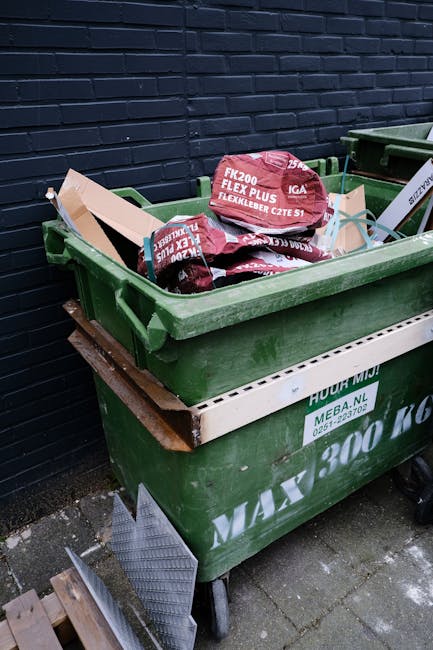
Many premises generate waste that is predictable but still needs a proper route away from site. Offices, shops, studios and hospitality spaces may all produce cardboard, bagged rubbish, mixed recyclables and worn-out items that cannot simply be left in the corner until later. Our commercial waste removal work focuses on clearing those materials in a tidy, efficient way, with sensible attention to access, building rules and the practical limits of the site.
Where loads are light and routine, the service can be shaped around recurring needs. Where waste appears after a reconfiguration, stock change or tenancy handover, it can be arranged as a one-off clearance. In either case, the objective is to remove the waste without creating extra work for your staff. For businesses looking for a more focused commercial arrangement, the office clearance page shows how office interiors, furniture and general contents are handled.
We also consider the condition and composition of the load. Mixed commercial waste often includes recyclable material, reusable items and general refuse in one collection, so it helps to have a service that can deal with variety rather than expecting everything to be identical. If the waste includes large or awkward objects, the useful thing is not to force a uniform solution, but to match the removal to the actual items on site.
Bulk items, office contents and heavier clearances

Commercial waste removal is not only about sacks and loose rubbish. Businesses often need help with desks, chairs, shelving, storage units, reception furniture and other bulky objects that are hard to move through busy premises. These items can take up valuable floor space, block access routes and slow down cleaning or refitting work, so clearing them properly makes a practical difference. Where suitable, we also handle the associated general waste that builds up around those larger items.
When furniture or fixtures are part of the load, the work may need a slightly different approach from an ordinary bin clear-out. Items can need dismantling, separating or carrying through narrow internal routes, and some loads include materials that should not be mixed with general rubbish. The furniture disposal page is helpful if your commercial waste includes pieces that are worn, obsolete or ready to leave the site altogether.
For businesses dealing with more than a few items, it is sensible to think about the clearance in terms of categories: what is staying, what is going and what may need to be separated for responsible disposal. That simple division often saves time on the day and makes the removal easier to manage. It also helps to identify anything sensitive or delicate before the work begins, especially where contents are being removed from active office or customer-facing spaces.
What commercial premises usually ask us to remove
Different sectors produce different waste patterns, but there are common themes. A workplace move can generate a mixture of broken chairs, unwanted desks, archived material and packaging. A retail refit may leave display fittings, stockroom clutter and transit packaging. Hospitality or light industrial premises can accumulate general waste, old equipment and items that have reached the end of their useful life. The service is most effective when those items are grouped clearly and described honestly.
To make the process easier, it is often useful to consider the waste in practical categories rather than broad labels. Typical groups can include:
- general business rubbish and mixed refuse;
- office furniture, desks and chairs;
- packaging, cardboard and storage waste;
- retail or display items no longer needed;
- bulky contents from commercial rooms and back-of-house areas.
Where you need a broader commercial service beyond one category, our home clearance and house clearance pages are not the right fit for business work, but they can help distinguish domestic from non-domestic removal on the site. For commercial clients, it is usually better to keep the enquiry focused on the premises type and the waste itself.
Sorting, recycling and responsible handling
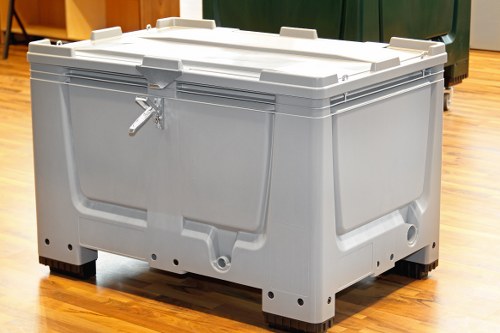
Commercial waste should not be treated as a single undifferentiated pile if it contains different material types. Cardboard, metal, timber, plastic, fabric, electrical items and general refuse may all be present in one clearance, and each may need a different route after collection. Our approach is to make the removal workable first, then keep the handling sensible and orderly so the load does not become more complicated than it needs to be.
That is one reason why businesses often want a service that can accept mixed waste with some degree of sorting at the point of collection. It reduces the burden on site staff and avoids making them guess how to classify every object in advance. Where the job includes reusable or recyclable material, a considered approach can help keep the clearance clean and efficient. If your load includes items that are mainly furniture-based, the furniture clearance page provides another relevant route through the available services.
It is also worth being aware that not every type of waste should be mixed with ordinary commercial rubbish. Some items need separate attention because of their condition or composition, and others may simply be easier to handle when they are kept apart from the main load. A clear description at the quotation stage helps us plan for that properly, instead of discovering it at the last moment when the collection is under way.
Service planning, access and quotation details
Most commercial waste removal work goes more smoothly when the basic site details are clear. The useful information is usually practical rather than lengthy: the type of premises, the amount of waste, where the waste is stored and whether there are access constraints such as stairs, narrow corridors or timed loading arrangements. A few accurate notes are often more valuable than a vague estimate. If the clearance is part of a larger move or tidy-up, say so plainly, because context can affect how the work is planned.
For quotations, photographs can be helpful when they show the actual items and the amount of space involved, but they are not the only way to explain a job. A short written description works well if the load is straightforward. If the collection includes heavier or awkward items, it can help to mention that early so the removal can be matched to the site. For businesses that want to compare pricing information before going ahead, the pricing and quotes page is the natural next step.
Use clear, practical details rather than sales language when you enquire. The aim is to let the removal be priced and organised accurately, not to create extra admin. If you already know the day or time window that suits your operation, include that too; otherwise, a request for a quotation can stay simple and to the point. We can then work from the facts that matter most.
About Victoria
Victoria is a central district in the City of Westminster, closely associated with transport, administration and high-footfall commercial activity. Victoria Station is one of London’s best-known rail and Underground interchanges, linking mainline services with the Circle, District and Victoria lines, and the wider area is shaped by that flow of passengers and workers. Nearby streets combine long-established civic buildings with offices, hotels, restaurants and retail frontages, giving the district a distinctly urban character. The area also includes major landmarks such as Buckingham Palace to the west, the Royal Mews, and the broad open spaces around St James’s Park, which create a strong contrast with the dense street network of the station quarter. Architectural variety is another feature: late Victorian and Edwardian commercial development sits alongside post-war office schemes and more recent redevelopment, while places such as Westminster Cathedral and the surrounding terraces add further historic depth. As part of central London, Victoria connects easily with adjacent districts including Westminster, Belgravia and Pimlico, but it retains its own identity through transport infrastructure, government proximity and the concentration of business activity around the station and surrounding streets. That combination of movement, institutions and mixed urban uses has made Victoria a familiar and important part of the capital’s commercial landscape.
Specialist clearances for offices, storage rooms and fit-outs
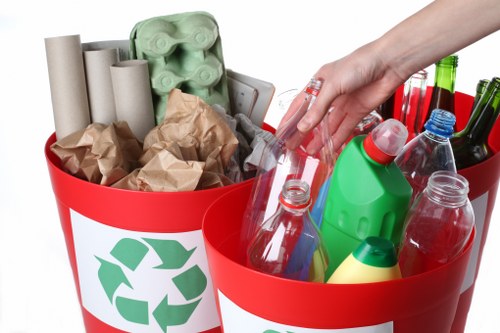
Some commercial waste removal jobs are broader than routine rubbish collection and involve fuller clearances of workspaces, storage areas or fitted rooms. This can include back offices, archive rooms, stock areas, meeting rooms or spaces being prepared for refurbishment. The work is often about more than lifting items out; it is about leaving the room in a state that supports the next stage, whether that is cleaning, redecoration, handover or new installation. Where an area contains a mixture of furniture and loose waste, it is sensible to treat the clearance as one coordinated task.
If your premises are being reorganised, it may be useful to separate items into what stays, what is being relocated and what should be removed altogether. This is especially true in active workplaces where people still need to use the site during the clearance. For those handling larger office changes, the flat clearance and loft clearance pages are not commercial services, but they show the range of clearance types available across the site for different settings. Within a business environment, the main priority is usually to keep the removal organised around the room layout and access points.
Where the job includes awkward contents, a staged approach can be useful: move what is easy first, then deal with bulkier objects once the route is clear. That simple sequence reduces obstruction and helps the clearance progress without unnecessary backtracking. It also makes it easier to keep track of what has been removed, which matters when several departments or tenants share the same building.
Working with different waste types
Commercial sites can produce waste with very different characteristics, and it is sensible to treat each type with the right level of attention. Office paper and cardboard are light but bulky; broken furniture can be physically awkward; packaging may be compact but messy; and some items may need more careful handling because of their material composition. Our waste removal service is intended to cope with this variety without requiring you to build a perfect pile in advance.
Where the load includes large household-style items from a business setting, such as sofas or mattresses from staff areas or serviced accommodation, those items can be separated out from the rest of the rubbish. The mattress and sofa disposal page is relevant when the contents include soft furnishings, while the fridge and appliance removal page is useful for equipment that sits outside ordinary rubbish handling. Matching the destination page to the item type keeps the process clearer for customers deciding what needs to go.
Good commercial clearance is usually about fit for purpose removal rather than excess complexity. If the waste can be described accurately and grouped logically, the job becomes easier to plan and carry out. That applies whether the collection is for a small office room, a shared business unit or a larger premises with several areas needing attention at once.
Other related services and useful pages
Some commercial clients need more than one type of clearance over time, especially if the premises contain storage rooms, furniture, loose waste and occasional specialist items. That is why it can help to understand the relationship between the available pages on the site before making an enquiry. For general mixed waste, the core waste removal page remains the most direct option, while the business waste removal page is a useful match where the work is tied specifically to commercial premises and their day-to-day output.
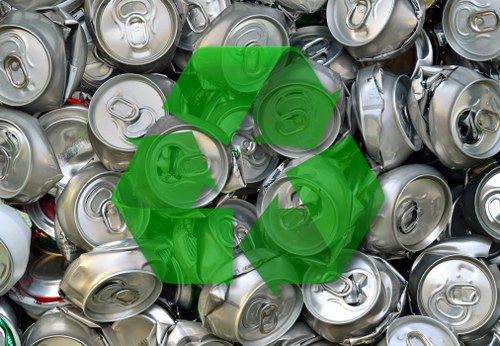
If the load includes sensitive paperwork, the confidential shredding page is relevant for documents that should not simply be discarded with ordinary rubbish. Where the main need is to understand how the business works, the about us page can provide a broader overview, and the recycling and sustainability page gives more detail on how recyclable material is treated within the wider service range.
When you are ready to proceed, ask for a quotation with a brief description of the waste, the premises type and any access details that may affect the collection. If you prefer to review the practical terms first, the payment and security page and the contact us page are the final useful places to check before sending your enquiry.